Local government authorities (LGAs) have gone two months without funding for Other Recurrent Transactions (ORT) and Constituency Development Fund (CDF), a development that has paralysed service delivery.
While the reformed K5 billion CDF has an annual allocation of K1.145 trillion, government has allocated K94.5 billion as ORT for LGAs and K44.8 billion and K28.1 billion for health and education sectors, respectively, in the 2026/27 fiscal year.
Health and education sectors have been receiving just a fraction of their monthly allocations while LGAs are the worst affected as they have not received anything since the new financial year started on April 1 2026.
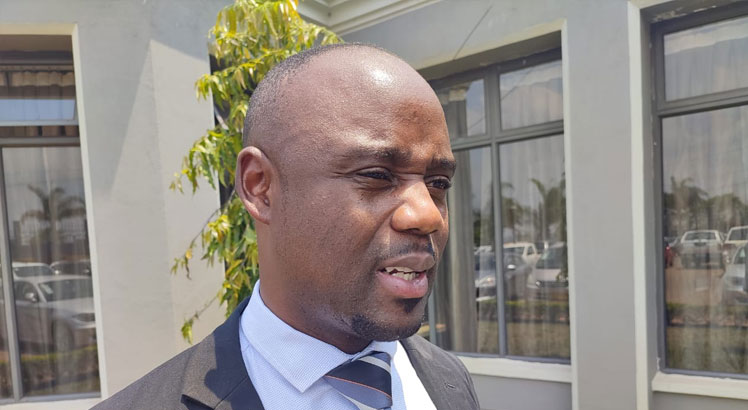
Malawi Local Government Association (Malga) executive director Hadrod Zeru Mkandawire in an interview said the delayed disbursement has operational implications that have affected payment of public utilities, including fuel for hospitals, water, and electricity bills.
cost escalation. | Nation
He said there is pressure on local resources and difficulties in execution of district work plans and budgets resulting in rescheduling of critical activities.
Said Mkandawire: “It has affected payments for monitoring, supervision and field operations, and timeliness of service delivery in sectors such as health, education, agriculture extension and water.
“On CDF main challenges are cost escalation and reduced value for money but also low budget absorption and implementation pressure, which may result in failing to utilise all the funds. There will be delayed project implementation.”
While warning that community expectations and public confidence will erode if projects delay to take off, he said this may result in avoidable cost overruns and failure to complete projects due to cost escalations.
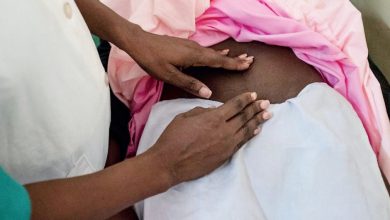
Human Resources for Health chairperson Solomon Chomba said delays affect health facilities maintenance, payment of bills, allowances and even meals.
“Any delay has disastrous effects. It leads to delayed treatment of the patients, infringing their rights to receive timely and quality services. It can increase mortality rates, mostly from preventable and treatable diseases,” said the chairperson who doubles as Physician Assistants Union of Malawi president.
Commenting on the development yesterday, governance and decentralisation analyst Winston Khamula said delayed remittances to LGAs undermine service delivery as councils depend on ORT for daily operations.
He said: “In health and other sectors, delays disrupt procurement, service provision, and development activities, burdening citizens most. Unpredictable funding weakens decentralisation, planning, and public trust.
“Government must ensure timely, consistent disbursement to support efficient local governance and sustainable development.”
Governance and public planning expert George Chaima feared that where there is no development taking place, citizens may get dissatisfied and demand for actionable response from government through various means including pressure and force.
“The government duty bearers have got one thing-to deliver on its promises for the people without any further delay,” he said.
From the accountability perspective, Centre for Social Transparency and Accountability executive director Willy Kambwandira said without proper justification, the revelations point to deeper problems of cash-flow pressures, and weak commitment to decentralisation.
His counterpart at Centre for Human Rights and Rehabilitation Michael Kaiyatsa said it is unfortunate that councils often become victims of central government inefficiencies and cash flow problems.
“Persistent underfunding and delayed financing weaken local authorities and make decentralisation meaningless in practice. Councils become dependent, ineffective, and unable to plan properly,” he said.
International Coalition on Health Financing Advocacy chairperson Maziko Matemba urged the central government to shift from discretionary funding models to legally protected and automated distribution channels.
“Insulate healthcare ORT from broader fiscal shortfalls to prevent central cash flow problems from stopping clinic operations,” he suggested.
Ministry of Local Government and Rural Development spokesperson Chimwemwe Njoloma and Treasury spokesperson Williams Banda were yet to respond to The Nation questionnaires by press time at 9pm yesterday.
However, during the presentation of the K10.9 trillion 2026/27 National Budget in Parliament in February, Minister of Finance, Economic Planning and Decentralisation Joseph Mwanamvekha said the new plan seeks to undertake accelerated fiscal decentralisation by providing significant resources to local councils through the CDF.